


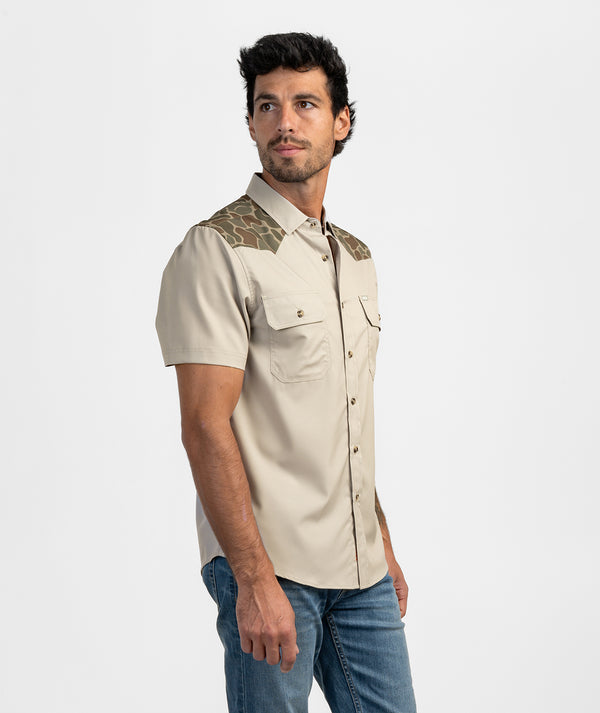
Button-down shirts can work as versatile winter layers when paired with warm base layers, fleece, jackets, and season-appropriate accessories.
Winter dressing does not have to mean relying only on heavy coats and bulky sweaters. A well-chosen button-down shirt can become one of the most useful pieces in a cold-weather wardrobe. It can add warmth, structure, color, and style while making it easier to adjust your outfit as temperatures change throughout the day.
The key is to think of a button-down shirt as part of a layering system rather than a standalone piece. Depending on the fabric, fit, and styling approach, it can work over a T-shirt, under a sweater, or beneath a jacket. The right combinations can help create comfortable outfits without making them feel overly heavy.
For a broader selection of seasonal clothing, explore the Men's Collection for versatile Southern-inspired apparel that can work across different layers and occasions.
Choose the Right Button-Down Shirt for Winter
Not every button-down shirt is equally suited to cold weather. Fabric weight, texture, and fit all affect how well a shirt works as a winter layer.
For colder conditions, look for materials that provide some structure and warmth. Flannel, brushed cotton, and other heavier fabrics can be useful because they add insulation without requiring the thickness of a winter coat.
A regular cotton button-down can also work well when it is layered over a long sleeve shirt or lightweight thermal top. This approach gives you more flexibility because you can remove a layer when you move indoors.
If you are looking for men's button-down shirts, consider the shirt's fabric, sleeve length, fit, and overall weight before deciding how it will fit into your winter wardrobe.
Start With a Comfortable Base Layer
The first layer sits directly against your skin, so comfort should be the priority. A lightweight T-shirt or long sleeve shirt can provide a simple foundation for a button-down.
Long sleeve graphic tees can also add visual interest beneath an open button-down shirt. A printed or graphic layer creates contrast while keeping the outfit relaxed.
Explore long sleeve graphic tees for men when you want a base layer that adds more personality to your winter outfit.
When choosing a base layer, avoid fabrics that feel too thick if you plan to add a sweater or jacket later. Several lightweight layers can often be more practical than one extremely heavy layer.
Wear a Button-Down Over a T-Shirt
One of the simplest winter layering combinations is a T-shirt underneath an open button-down shirt. This style works particularly well when temperatures are cool but not extremely cold.
Leave the shirt open over the base layer for a relaxed appearance. Button it partially when you want more coverage, or close it fully for a cleaner look.
A neutral T-shirt can create a simple foundation, while a patterned button-down can become the main visual element. Alternatively, a solid button-down can balance a graphic or printed base layer.
This combination is also useful indoors because the shirt can be removed easily without affecting the rest of the outfit.
Layer a Button-Down Under a Sweater
A button-down shirt can also serve as a structured layer underneath a sweater. This approach gives a classic appearance while adding warmth.
Choose a sweater with enough room to fit comfortably over the shirt. A slim or moderate shirt fit usually works better than an oversized button-down because excessive fabric can create unwanted bulk.
For a polished look, allow the collar to sit neatly above the sweater neckline. You can also let the cuffs extend slightly beyond the sweater sleeves for added contrast.
Neutral colors make this combination easy to coordinate. White, navy, gray, cream, brown, and muted green can work particularly well with seasonal wardrobes.
Add a Fleece Layer for Extra Warmth
When temperatures drop further, a button-down shirt can become part of a warmer combination with fleece. Fleece provides insulation while remaining relatively easy to layer.
A fleece jacket can be worn over a button-down when you want a practical cold-weather outfit. The shirt provides structure underneath, while the fleece becomes the primary insulating layer.
For another winter-ready option, consider a fleece jacket as an outer layer over a shirt or lightweight base.
The combination works best when each layer has a clear purpose. A lightweight shirt can provide comfort and style, while fleece supplies additional warmth.
Use Long Sleeve Tees as an Intermediate Layer
A long sleeve T-shirt can help bridge the gap between a lightweight button-down and a heavier outer layer. This is especially useful when the weather changes throughout the day.
For example, a simple layering structure can include:
-
Lightweight T-shirt
-
Long sleeve shirt or button-down
-
Fleece or jacket
-
Optional outer coat
This system allows you to adjust your clothing based on the temperature. It also reduces the need to wear one very heavy garment indoors.
The important factor is balance. If every layer is thick, the outfit can become restrictive. Lightweight fabrics underneath and moderately warm outer layers often create a more comfortable combination.
Match Your Button-Down With the Right Bottoms
The bottom half of your outfit should complement the layering approach without adding unnecessary bulk.
For winter, jeans, chinos, and other structured pants can pair naturally with button-down shirts. Neutral trousers can help create a cleaner appearance when the shirt has a strong pattern.
You can also build a relaxed Southern-inspired outfit by pairing a button-down with casual apparel from the Men's Collection.
The goal is to maintain visual balance. If your upper layers include several patterns or textures, simpler bottoms can keep the outfit cohesive.
Coordinate Colors Across Your Layers
Color coordination can make winter layering look more intentional. You do not need every piece to match exactly. Instead, choose shades that complement each other.
A few reliable combinations include:
-
Navy with white, gray, or tan
-
Olive with cream, brown, or black
-
Burgundy with navy, gray, or neutral shades
-
Light blue with navy, beige, or charcoal
-
Cream with brown, olive, or denim
Patterns should also be considered. If the button-down has a bold pattern, choose simpler layers underneath and above it. If the shirt is solid, a subtle graphic or textured layer can add visual interest.
Consider the Fit of Every Layer
Good layering depends heavily on fit. Each garment should leave enough room for the next layer without making the outfit look oversized.
A base T-shirt should sit comfortably beneath the button-down. The button-down should have enough space for movement without becoming excessively loose. If you add fleece or a jacket, the outer layer should accommodate the layers underneath.
Pay attention to the shoulders and sleeves. Tight shoulders can make multiple layers uncomfortable, while overly long sleeves can create unnecessary fabric around the wrists.
The best winter layering combinations allow you to move naturally while keeping the overall silhouette clean.
Style Button-Down Shirts for Different Settings
A button-down shirt can adapt to different levels of casual dressing.
For a relaxed outfit, wear an open button-down over a T-shirt with casual pants and comfortable footwear.
For a more polished appearance, button the shirt and pair it with chinos or another structured bottom. Add a sweater or clean jacket when additional warmth is needed.
For outdoor conditions, use the shirt as one layer within a larger system that includes fleece and an appropriate outer jacket.
This flexibility makes button-down shirts useful throughout the winter season rather than limiting them to one specific type of outfit.
Keep Accessories Practical
Winter accessories can complete a layered outfit while adding useful protection from cold weather. Scarves, beanies, gloves, and warm socks can provide additional coverage when temperatures require it.
Choose accessories that complement the colors and textures already present in the outfit. If your clothing includes several patterns, simple accessories can help maintain balance.
Footwear should also match the conditions. Practical boots or weather-appropriate shoes can work well when cold or wet conditions are expected.
Avoid Excessive Bulk
One of the biggest challenges with winter layering is adding too many heavy pieces. More layers do not always mean more comfort.
Instead, consider the warmth and purpose of each garment. A lightweight base layer, a button-down, and a fleece jacket can provide a useful combination without creating excessive bulk.
Avoid stacking multiple thick shirts beneath a heavy jacket unless the weather genuinely requires it. Too much fabric can restrict movement and make indoor environments uncomfortable.
Layering should give you control over your comfort, not make your clothing difficult to manage.
Build a Flexible Winter Wardrobe
A strong winter wardrobe does not need dozens of separate pieces. A smaller collection of versatile clothing can create many combinations when the items work well together.
Button-down shirts are especially useful because they can function as base pieces, middle layers, or standalone shirts. Pair them with long sleeve tees, sweaters, fleece jackets, and other seasonal clothing to create different looks.
A versatile wardrobe can also include performance polos for situations where a polished yet comfortable shirt is preferred.
Choose colors and fabrics that coordinate easily. This makes it simpler to create outfits without needing to purchase a completely different set of clothing for every temperature change.
Winter Layering Mistakes to Avoid
A few simple mistakes can make a layered outfit less comfortable or less polished.
First, avoid choosing every layer in the same weight. Combining lightweight and medium-weight fabrics usually creates a better result.
Second, pay attention to proportions. An oversized shirt under a fitted jacket may feel restrictive, while several loose layers can make the outfit appear shapeless.
Third, avoid ignoring the fabric of your base layer. Rough or uncomfortable materials can become more noticeable when covered by multiple garments.
Finally, consider where you will spend most of your time. If you will move between cold outdoor conditions and heated indoor spaces, choose layers that can be removed easily.
How to Make Button-Down Shirts Work All Winter
The best way to use button-down shirts during winter is to treat them as flexible components rather than one-purpose garments.
Start with a comfortable base layer. Add a button-down for structure and style. When more warmth is needed, add a sweater, fleece, or jacket. Finish the outfit with practical accessories and footwear suited to the conditions.
This approach gives you more control over warmth while keeping your clothing versatile. It also allows the same button-down shirt to work across casual, polished, and outdoor-oriented outfits.
With the right fabric, fit, and combination of layers, button-down shirts can remain useful well beyond transitional weather.
FAQs
1. Can you wear a button-down shirt in winter?
Yes. A button-down shirt can work well in winter when layered with a long sleeve shirt, sweater, fleece, or jacket. The appropriate combination depends on the temperature and fabric weight.
2. What should you wear under a button-down shirt in cold weather?
A lightweight T-shirt, thermal top, or long sleeve shirt can work underneath a button-down. Choose a comfortable base layer that does not create excessive bulk.
3. Can you wear a button-down shirt under a sweater?
Yes. A button-down under a sweater creates a structured winter outfit. Choose a shirt with a comfortable fit so it sits smoothly beneath the sweater.
4. What type of button-down shirt is best for winter layering?
Heavier cotton, flannel, and brushed fabrics can be useful for colder conditions. Lightweight button-downs can also work when combined with warmer layers such as fleece or sweaters.
5. How many layers should you wear in winter?
There is no fixed number of layers for every situation. A practical system can include a lightweight base, button-down or mid-layer, and warmer outer layer. Adjust the number and weight of layers according to the weather and activity.
Conclusion
Button-down shirts can be a practical and stylish part of a winter wardrobe when used correctly. They can be worn over lightweight base layers, beneath sweaters, or alongside fleece and jackets to create adaptable outfits for changing temperatures.
Focus on fabric, fit, color coordination, and layering order. Avoid excessive bulk and choose pieces that can work together across multiple outfits. With these principles, button-down shirts can provide a comfortable balance of warmth, flexibility, and Southern-inspired style throughout the colder months.
Share:
Women's Winter Sweaters: Cardigans, Crewnecks, and Sweater Vests Explained
Fabric Guide: What Makes SSCO Flannels and Pullovers Warm Without the Bulk